

WRITTEN BY
Reading Time
For many years, life insurance has been viewed primarily as a protection tool, and across Asia’s private wealth landscape, it is taking on a far broader strategic role.
As the region enters one of the largest intergenerational wealth transfers in history, affluent families are confronting a new set of challenges.
Family businesses are passing into second and third generations, wealth is becoming more international, and assets are often spread across multiple jurisdictions.
Cerulli Associates estimates that US$124 trillion in wealth will transfer globally through 2048, with Asia expected to account for a significant share of that transition. At the same time, Capgemini’s World Wealth Report 2025 shows that Asia-Pacific remains one of the fastest-growing regions for private wealth.
Yet much of that wealth is concentrated in assets that are difficult to divide.
Entrepreneurial businesses, commercial property and private investments can preserve value over generations, but they do not necessarily provide liquidity when ownership changes, taxes become payable or family members need to be treated equitably.
Liquidity often becomes the missing piece in succession planning. A founder may leave one child managing the family business while another has no operational involvement. On the other hand, a property portfolio may represent substantial wealth, yet generating cash at short notice often means selling assets at the wrong time.
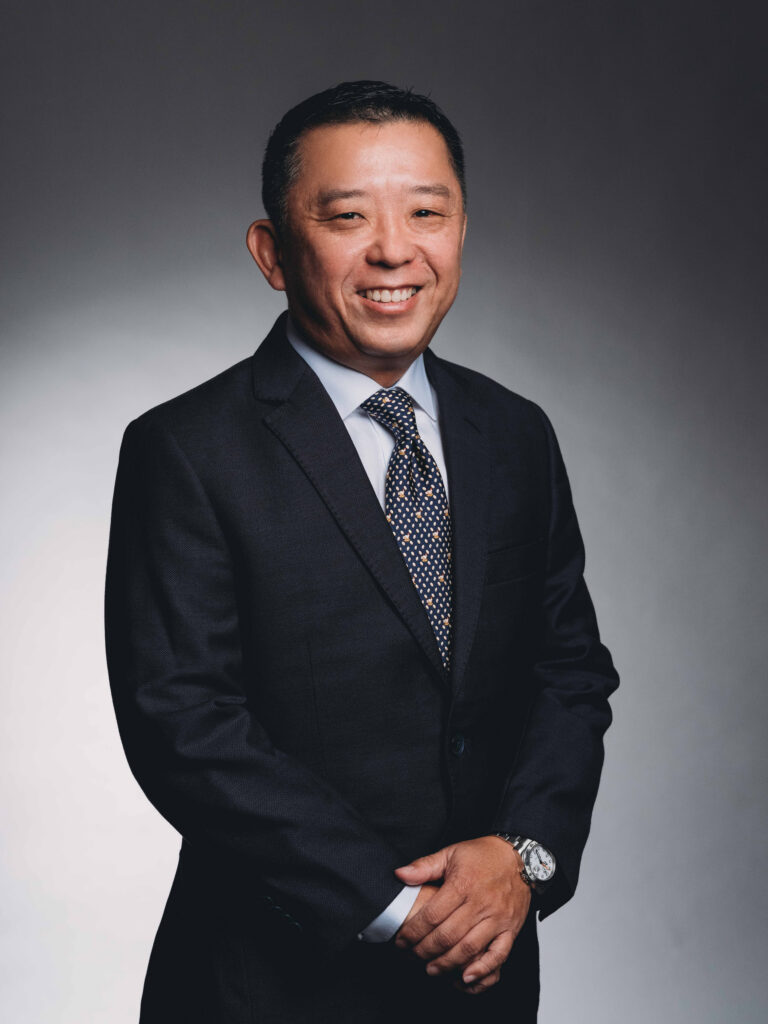
For Nikki Koh, Group Chief Commercial Officer and CEO of Charles Monat Associates Singapore, life insurance changes this conversation. Properly structured, it can provide liquidity when it is needed most, allowing businesses and other strategic assets to remain intact during ownership transitions.
The need is particularly acute across Asia, where wealth is often concentrated in private businesses and real estate. South Korea provides one example, with property dominating household wealth and inheritance taxes on controlling shareholders among the highest effective rates globally. In these circumstances, access to liquidity can help preserve long-term family wealth than force the sale of strategic assets.
Many families remain underprepared. UBS’s 2025 Global Family Office Report found that only 53 per cent of surveyed family offices had a formal will or estate plan in place, highlighting that successful succession depends not only on transferring assets, but on ensuring the right structures are in place to support the next generation.
53%
UBS 2025 GLOBAL FAMILY OFFICE REPORT
Drawing on more than 25 years of advising affluent and ultra-high-net-worth families across banking and insurance, Nikki Koh believes the issue is not whether wealthy families recognise the value of life insurance, Instead, he has seen the challenge shift as succession planning becomes more complex.
As families accumulate more illiquid assets and establish lives across multiple jurisdictions, he affirms that life insurance should no longer be viewed in isolation, and instead be part of a wealth framework designed to support continuity across generations.
Liquidity, protection, succession, and governance must function together.
This reflects a shift in how wealthy families approach long-term planning. Rather than relying on standalone solutions, they are building integrated wealth structures where trusts, holding companies, governance frameworks and life insurance each play a distinct role.
This evolution was echoed at Charles Monat Associates’ Legacy Planning Leadership Forum 2025, where advisers emphasised the growing importance of integrating insurance into wider legacy planning as families become increasingly cross- border.
For many Asian families, life insurance has become an important instrument for preserving stewardship as wealth passes between generations. The more wealth is concentrated in businesses, private assets and real estate, the more valuable carefully planned liquidity becomes.
As Nikki Koh and Charles Monat Associates demonstrate, the future of life insurance in Asia is less about the policy itself and more about building a resilient wealth architecture that enables businesses, investments and family relationships to pass smoothly to future heirs.
To read Nikki Koh’s full case study, download The Private Client’s Guide to Building Legacy, Protecting Wealth, Creating Impact in 2026.
Guide Year and Month
Guide Excerpt

Just a few more seconds and you can access this unique guide. No verification required. Just your email.